

A jewellery consultation usually starts the same way: a bride pulls up a photo of a heavy temple haram she loves, and the first question is never about design. It's about whether she can actually afford the solid gold version, and whether the 925 sterling silver alternative sitting in the next case is a real substitute or a compromise dressed up to look like one.
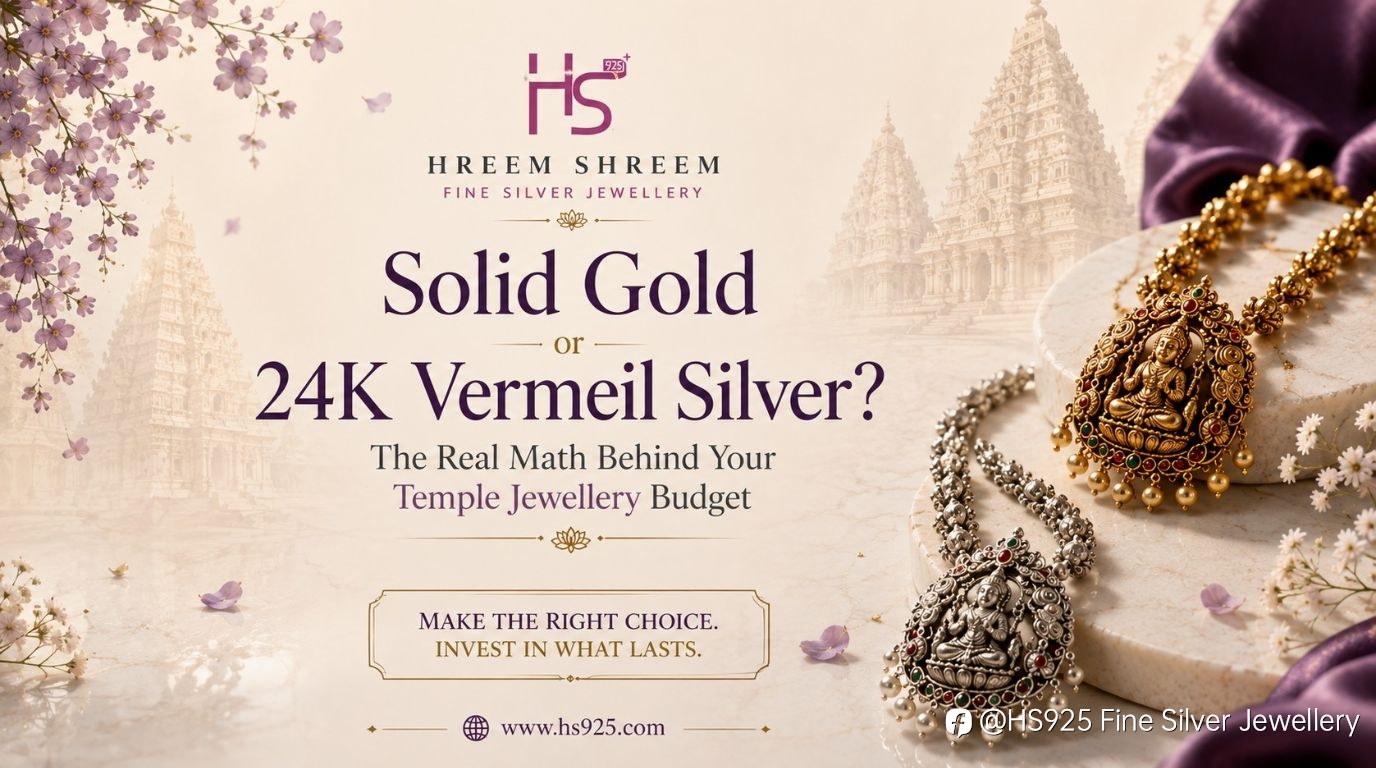
That second question deserves a more honest answer than most showrooms give it. The two options aren't the same product at different prices; they're genuinely different things, built for different purposes, and understanding that difference matters more than just comparing numbers on a price tag.
Here's the honest answer, broken down the way it should have been explained from the start: the actual cost math, the craftsmanship question, and what happens to each option five years down the line.
Upfront Investment & Value Breakdown
What You're Actually Paying For, Gram by Gram
Solid gold and gold-plated silver aren't priced on a sliding scale of the same thing. They're two different financial products wearing the same visual outfit.
- 24K gold-plated 925 sterling silver delivers the identical visual grandeur, warmth, and heavy look of 22K or 24K solid gold
- That look comes at roughly 10 to 15 percent of solid gold's actual cost
- The gap isn't a quality shortcut; it's the difference between paying for a thin, real gold surface versus paying for gold all the way through
Spending less on the base metal doesn't mean spending less on the wedding overall. It usually means the opposite: a bride who'd have stretched her entire budget into one solid gold chain can instead build a full trousseau: choker, haram, bangles, earrings, all in genuine gold-plated silver, for a similar or smaller total spend.
Which One Actually Holds Value Over Time
This is where the two options genuinely diverge, and it's worth being honest about both sides.
- Solid gold functions as real wealth storage, a hedge against inflation, with instant liquidity almost anywhere in the world
- 925 sterling silver isn't that same asset class, but it isn't nothing either
- Hallmarked silver retains real, verifiable precious metal value, which puts it in an entirely different category from brass, copper, or alloy fashion jewellery that carries none
Gold wins as a long-term capital asset. Silver wins as a genuine precious metal that happens to cost a fraction of gold's price, without pretending to be gold's financial equivalent. Knowing which of those two things you're actually buying prevents disappointment either way.
Artistry, Detailing & Wearability
Can Silver Actually Match Gold's Carving Detail?
Short answer: yes, when the craftsmanship is done properly.
- 925 sterling silver's specific malleability soft enough to hammer, strong enough to hold shape lets master artisans execute high-relief Nakshi deity carvings with the same precision solid gold allows
- The same Repoussé and chasing techniques apply to both metals identically
- A rich, aged, hand-patinated 24K antique gold finish achieves the same warm depth on a silver base that it does on solid gold, without the flat, artificial look cheaper plating methods produce
The craftsmanship question, in other words, is really about the artisan and the plating quality, not the base metal underneath.
Comfort and Travel Security Nobody Talks About Enough
Two practical advantages tend to get left out of the design conversation entirely.
- Destination weddings make carrying high-value solid gold across cities and hotels a genuine source of stress, anxiety, and real theft risk, all layered onto an already demanding week
- Gold-plated silver removes most of that anxiety, while still delivering the visual weight a wedding calls for
- Separately, hollow-core Repoussé construction a direct feature of how silver pieces are hammered makes heavy-looking Rani Haars and chokers genuinely lightweight to wear, holding up through a full day of rituals in a way solid gold's density often can't match
Maintenance, Plating Lifespan & Sustainability
Not All "Gold Plated" Silver Is Built the Same
This is the detail that separates a genuinely good gold-plated piece from a disappointing one, and it's rarely explained clearly at the point of sale.
- Thin flash plating fades within weeks of regular wear, exposing the silver underneath
- Thick, multi-micron 24K gold vermeil is built specifically to resist that fading, holding its colour and depth for years instead of months
- Ask directly about micron thickness before buying; a seller confident in their plating quality will answer without hesitating
What Happens When the Shine Eventually Fades
Every gold-plated piece lightens eventually, no matter how well it's cared for. What happens next is where silver has a real, lasting advantage.
- Brass and alloy fashion pieces degrade permanently once their coating wears through; there's no meaningful way to restore them
- 925 silver can be professionally re-plated in fresh 24K gold repeatedly, for decades
- A well-maintained gold-plated silver set can realistically be restored and worn across an entire lifetime, the way solid gold traditionally has been
The Skin Safety Question Worth Asking First
Before craftsmanship or plating even enters the conversation, the base metal itself needs to check out.
- Genuine 925 silver is 100 percent nickel-free and lead-free
- That combination prevents the skin breakouts and itching that base-alloy imitation jewellery frequently causes during long wedding functions
- Verification comes down to three checks: the official BIS hallmark, a laser-etched 925 purity stamp, and a seller-provided purity certificate
For the complete walkthrough on exactly where to find these marks and how to check them in person, see How to Identify Real 925 Sterling Silver Jewellery, which covers the process step by step.
Frequently Asked Questions
Can people tell the difference between solid gold and 24K gold-plated 925 silver temple jewellery?
Genuinely, no, not when it's done right. Authentic hand-carved Nakshi work, finished with a proper multi-micron 24K antique gold patina, is visually indistinguishable from solid gold to the naked eye. The difference exists in the metal composition, not in how the piece actually looks worn.
Is gold-plated 925 silver temple jewellery considered a good investment?
It depends on what kind of investment you're asking about. As a financial asset, solid gold still wins; it functions as genuine capital preservation in a way silver doesn't quite match. But as a smart utility purchase, gold-plated 925 silver holds up extremely well. It's a certified precious metal that retains real intrinsic value, while saving 85 percent or more in upfront cost compared to solid gold.
Does gold-plated silver temple jewellery need more maintenance than solid gold?
A little, yes, though not dramatically. Solid gold needs almost no special care beyond basic cleaning. Gold-plated silver benefits from a few extra habits: applying perfume before jewellery goes on, storing pieces in an airtight pouch, and occasional professional repolishing once plating starts to fade after a few years of regular wear.
How do I know if a seller's gold plating is actually thick enough to last?
Ask directly for the micron thickness, and be cautious of vague answers like "high quality gold plating" with no number attached. Genuine vermeil-grade work is usually rated at 2.5 microns or higher. Anything described only as a "gold wash" or "flash plated" is almost certainly thinner, and won't hold up nearly as long.
The Bottom Line
Solid gold and 24K gold-plated 925 silver aren't really competing for the same job. One is a long-term financial asset that happens to be wearable. The other is built specifically to deliver the full visual weight of heritage temple jewellery, at a price that lets a bride actually build the complete trousseau she wants, rather than compromising down to one piece. Knowing which one you're buying and checking the hallmark, plating thickness, and craftsmanship before you pay is what makes either choice genuinely good.
风险提示:本文所述仅代表作者个人观点,不代表 Followme 的官方立场。Followme 不对内容的准确性、完整性或可靠性作出任何保证,对于基于该内容所采取的任何行为,不承担任何责任,除非另有书面明确说明。
 暂无评论。 来发表第一条观点吧。